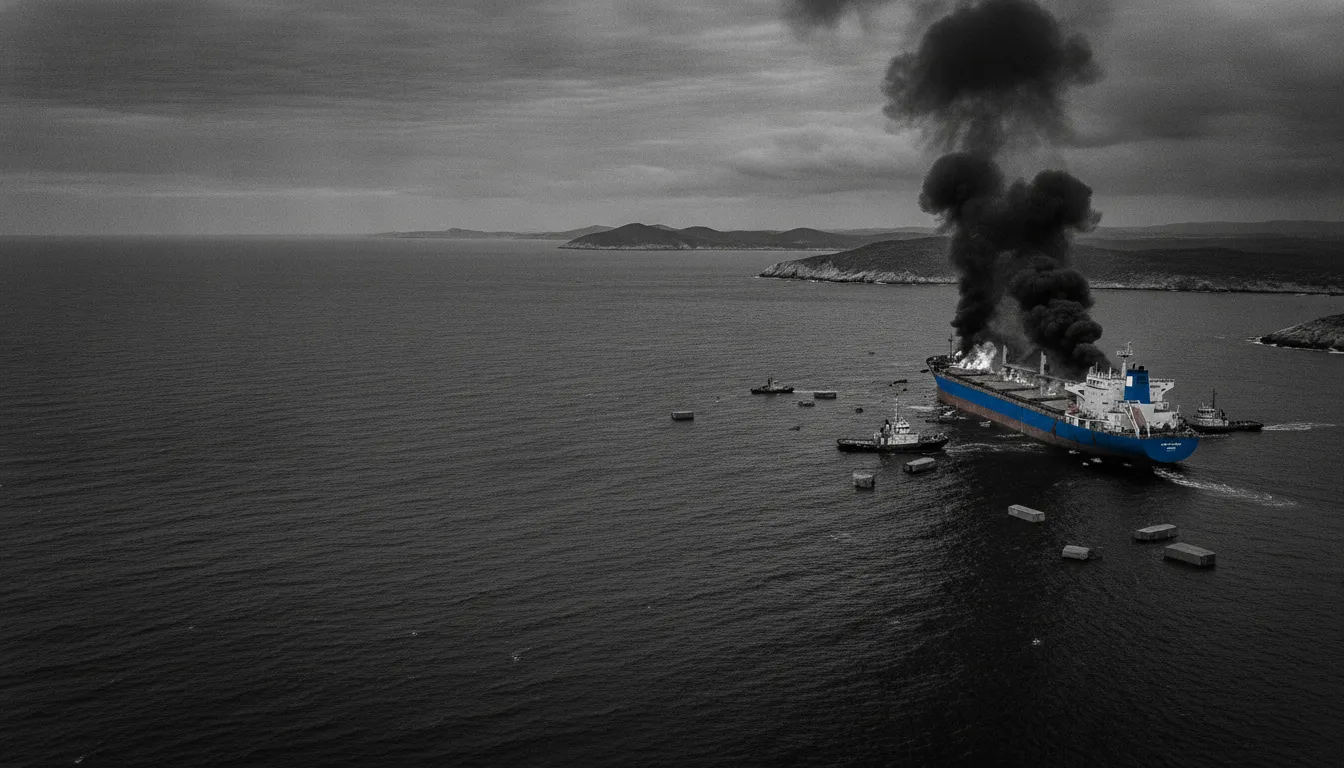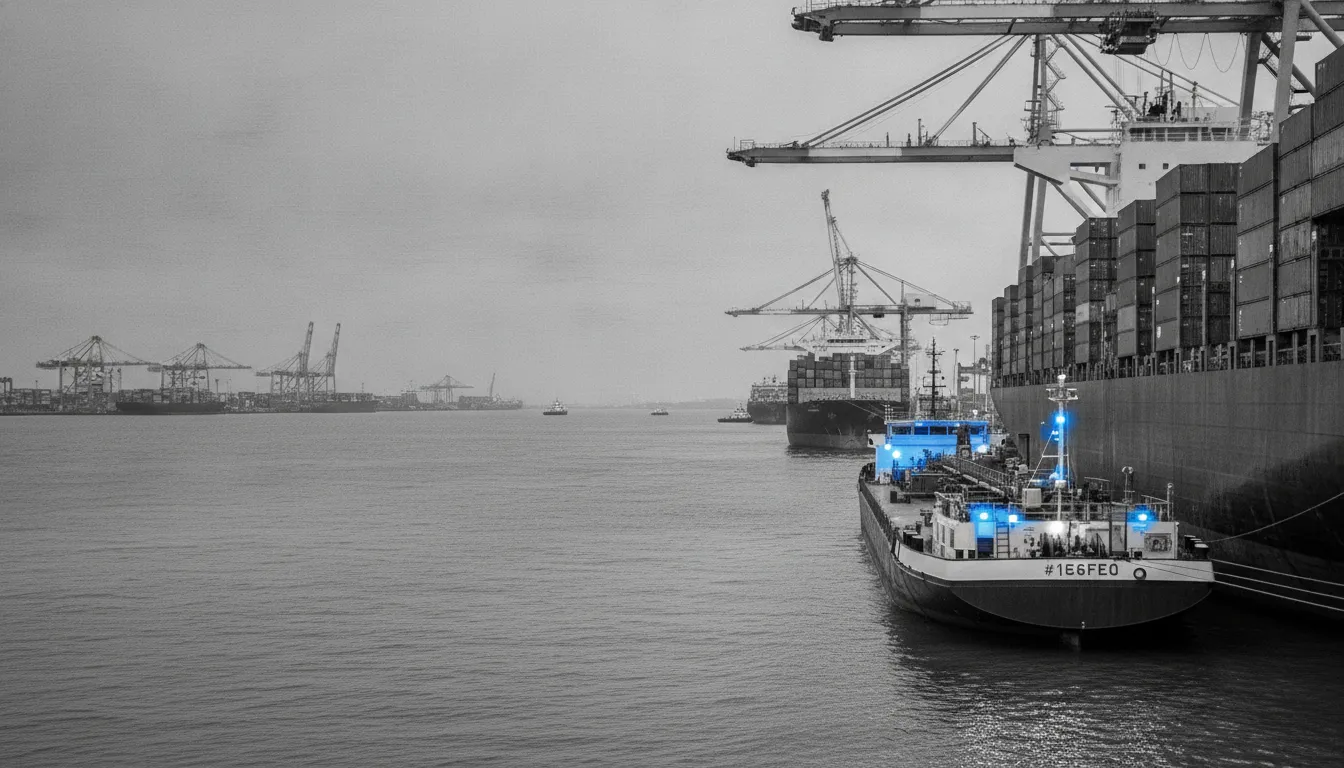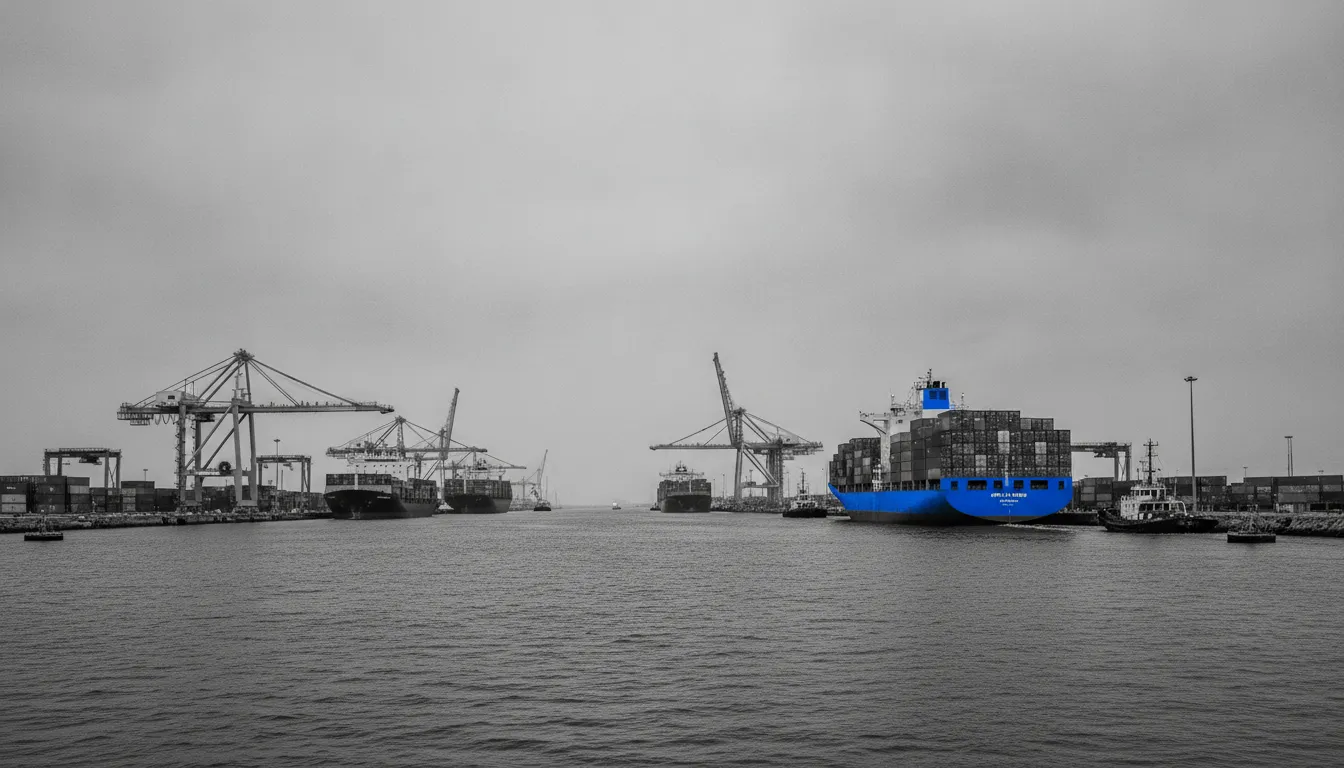
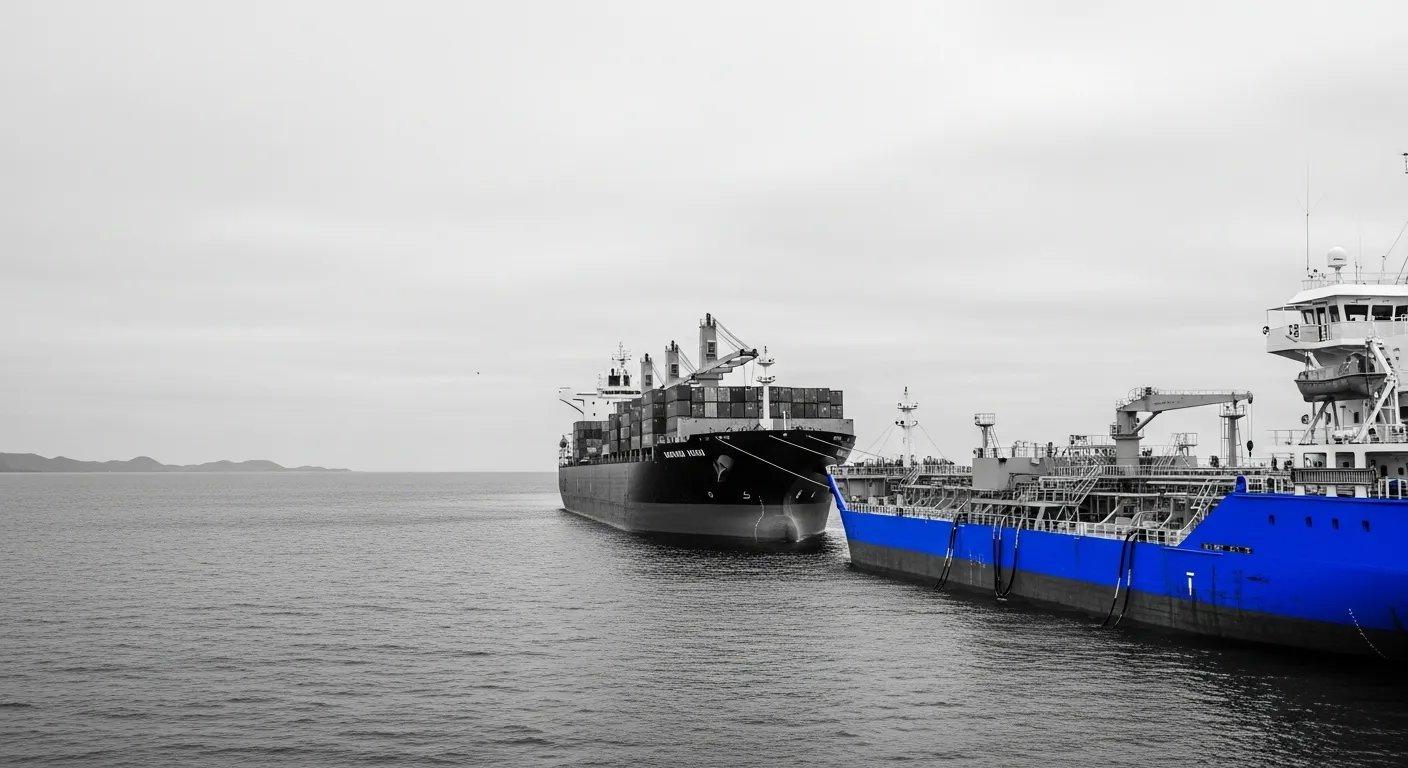
"Bunkering in offshore locations, such as Walvis Bay, has advantages over in-port refuelling, as ports often prioritise cargo calls over bunker-only calls."
— Monjasa spokesman, January 2024
South Africa's Bunker Collapse: The Scale of Loss
South Africa held the continent's largest bunkering hub for decades. Yet between 2023 and 2024, bunker volumes in Durban and Cape Town fell from approximately 130,000 tonnes per month to 80,000 tonnes per month—a 38% decline. Regulatory crackdowns—most notably the tax dispute that suspended supplies at Algoa Bay's Port Elizabeth in late 2023—and systemic port congestion created a vacuum that regional competitors filled rapidly.
Port congestion at Durban and Cape Town has proven chronic. In November 2023, over 60,000 containers and 79 vessels backed up outside Durban; current waiting times remain 2–3 days at Durban and up to 6 days at Cape Town. For vessels seeking bunker-only calls, these delays incur demurrage penalties and crew fatigue costs that can exceed $70,000 per day for bulk carriers. This penalty exposure is reshaping buyer procurement strategy entirely. Instead of waiting berth-side in South Africa, shipowners now schedule fuel lifts at Walvis Bay, Mauritius, or further afield.
Monjasa's Pivot to Namibia: A Market Signal
In January 2024, Danish bunker supplier Monjasa—one of Africa's largest suppliers—moved three bunker delivery vessels to Walvis Bay to meet surging demand. That operational shift, reported by Lloyd's List and subsequent industry sources, was not a pilot; it reflected real volume momentum. Monjasa senior trader Simone Piredda confirmed that "demand across the west Africa region, and Namibia in particular, is still high." By 2024, Walvis Bay entered Monjasa's top 10 global supply locations for the first time, displacing weaker African hubs.
This migration matters because Monjasa operates approximately 35 tankers and barges globally and maintains long-term supply partnerships with major carriers. When a supplier of that scale repositions fleet assets to Namibia, it signals that volume velocity, margin structure, and operational ease now favour the offshore Walvis Bay model over South African ports. New entrants have followed: in November 2025, Dubai-based Flex Commodities launched physical bunkering operations at Walvis Bay and Lüderitz, targeting what Flex's managing partner Rakesh Sharma called "the growing volume of traffic moving around the Cape and the offshore market."
Offshore vs. In-Port: The Operational Case
Offline bunkering—ship-to-ship transfer via barges or tankers while a vessel is at sea or anchorage—eliminates queue risk. A buyer ordering 500–1,000 tonnes of VLSFO at Walvis Bay can now expect delivery within 7–10 days from order (based on standard live bunker quotations), whereas in-port calls at Durban face undefined waiting periods and berth-slot scarcity. Offshore operations also reduce infrastructure friction: there is no gate booking, no vessel scheduling coordinator bottleneck, and no terminal operating procedure delays.
The tradeoff is operational complexity. Offshore STS bunkering requires calm seas, proper hose and safety equipment, and pre-transfer alignment meetings. Weather-dependent delays, though, are typically shorter and more predictable than South African port congestion. More importantly, port prioritisation rules mean in-port bunker-only calls are queued behind cargo vessels. As Monjasa's spokesman noted in 2024, "ports often prioritise cargo calls over bunker-only calls." Walvis Bay's designated offshore supply zone bypasses that hierarchy entirely. For time-critical routes and tight schedules, that operational asymmetry is decisive.
Lead Times, Demurrage, and Buyer Calculus
For a bulk carrier or container vessel on a Cape route from Asia to Europe, every idle day at a congested South African port costs demurrage. Typical demurrage for bulk carriers ranges from $35,000 to $70,000 per day depending on vessel size and contract terms. A 3–5 day wait in Durban for a bunker-only call translates to $105,000–$350,000 in pure waiting costs, before fuel premium or scheduling penalties.
Walvis Bay's 7–10 day lead time is pre-arranged and predictable; it occurs during transit, not at congestion-prone berths. Additionally, bunkering demand in Namibia has risen 10%–15% month-on-month, yet supply has kept pace—Monjasa and TFG Marine report no shortages, only rising consumption. In contrast, South Africa imports 60,000 tonnes of fuel oil monthly and remains a net importer unable to self-supply. Buyers conducting route optimisation increasingly pencil in Walvis Bay as a fixed bunkering window, avoiding South African berth uncertainty and the cost cascade of demurrage and lost time.
Market Scale: From Mauritius to Namibia
Walvis Bay's appeal is amplified by regional dynamics. Port Louis (Mauritius) bunker sales nearly doubled from 509,837 tonnes in 2023 to 929,043 tonnes in 2024, capturing traffic from the Red Sea rerouting. Walvis Bay is capturing its own share of the same cargo flow. More significantly, new supplier entry signals confidence: beyond Monjasa and Flex, operators like Vitol, Bunker Partner, Peninsula, and Global Fuel Supply have announced African expansion plans. Investment concentration at Walvis Bay and other African hubs reflects a permanent shift, not short-term disruption response. Freight costs and time variability around congested South African ports add 3.9% to 24.5% of cargo value; shifting bunker supply chains reduces that leak materially.
Suppliers also report stronger demand in offshore zones. Misa Energy in Ghana is scaling volumes to meet rising demand in "offshore bunkering zones," with expectations that African offshore bunkering will triple over the next decade. The infrastructure gap (offshore capacity for STS operations) remains Africa's binding constraint; Walvis Bay's deep-water port and designated offshore supply areas position it ahead of competitors by 24–36 months in readiness.
What This Means for Procurement Buyers and Ship Operators
The message to procurement teams is clear: Durban and Cape Town remain viable for full-service cargo, repairs, and crew changes, but for standalone bunker procurement, regional hubs now offer superior cost-and-time efficiency. A procurement strategy that locks bunker orders into South Africa incurs embedded demurrage risk and supplier scarcity. Instead, buyers should: (1) establish framework agreements with Monjasa, TFG, or Flex for Walvis Bay/Mauritius delivery windows; (2) price lead-time visibility at 7–10 days as a baseline, accepting no Durban uncertainty premium; and (3) coordinate offshore STS windows with voyage planning to capture fuel at anchor or designated offshore zones. This shift is no longer marginal: it reflects the permanent redeployment of bunker supply infrastructure away from congested South African ports to Namibia and neighbouring regional hubs.