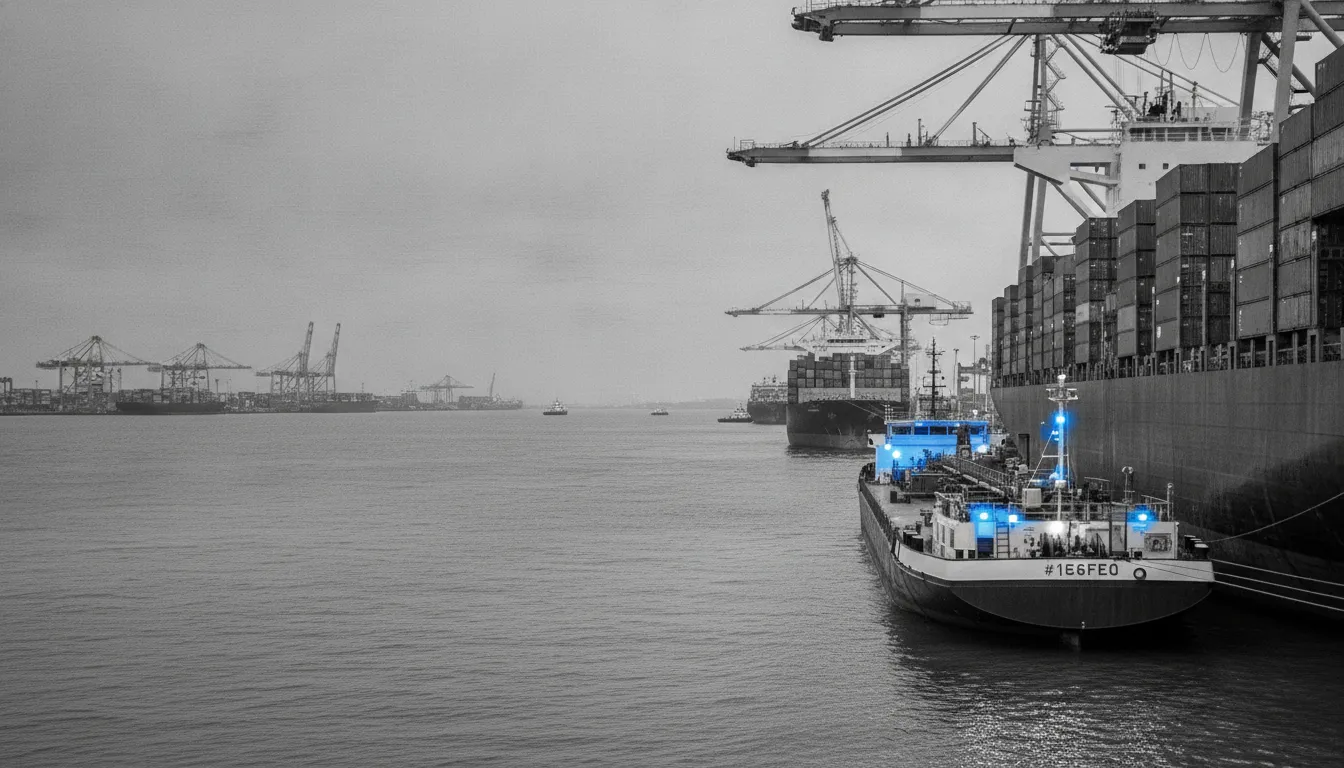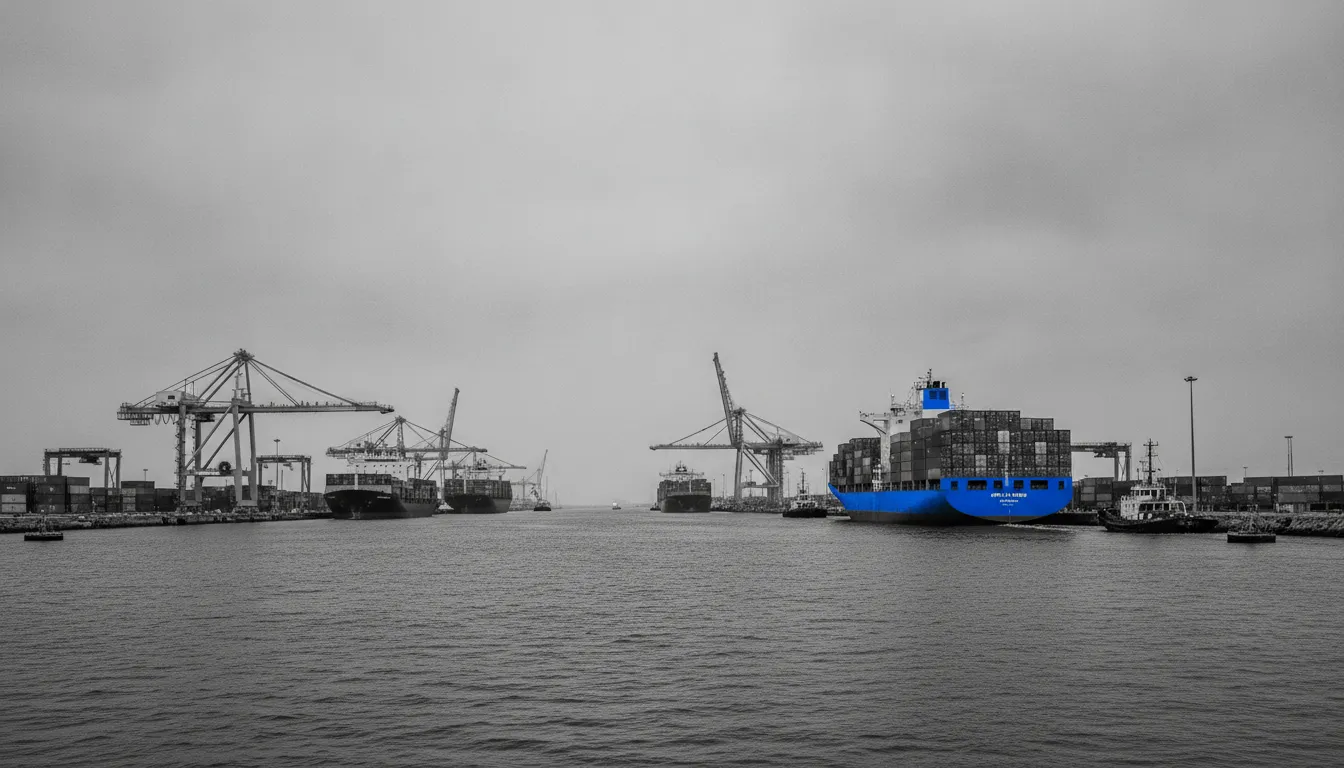
"Ports in West and Central Africa must move beyond their traditional role as cargo gateways and become drivers of broader blue economy growth." — Dr Abubakar Dantsoho, Managing Director, Nigerian Ports Authority, May 2026
A $27 Billion Regional Pivot Reshaping West African Trade
On 18 May 2026, Nigeria's Minister of Marine and Blue Economy, Dr Adegboyega Oyetola, announced that West and Central Africa is committing over $27 billion to port capacity expansion projects. The announcement came at the Mid-Year Session of the Port Management Association of West and Central Africa (PMAWCA) in Lagos, where delegates from across the sub-region confirmed a cascade of infrastructure projects designed to reposition the region as a dominant global maritime corridor. The $27 billion pool encompasses major deepwater initiatives, including the $20 billion Simandou-Morebaya Deep Sea Port project in Guinea, the $2 billion Port San Pedro expansion in Côte d'Ivoire, the $1.5 billion Lekki Deep Sea Port in Lagos (completed in 2023), and the $1.5 billion Tema port developments in Ghana, alongside the $1.2 billion Ndayane Port in Dakar, Senegal.
In Nigeria specifically, the Federal Government is expanding deep-seaport infrastructure to complement existing facilities and strengthen supply chain resilience. The Nigerian Ports Authority is overseeing rehabilitation works at Apapa and Tin Can Island—two critical Lagos hubs where a $1 billion upgrade programme is underway, supported by a $600 million investment from APM Terminals. Channel deepening, quay reinforcement, and digital infrastructure upgrades are designed to accommodate larger vessels and improve container handling efficiency. Dr Abubakar Dantsoho, Managing Director of the NPA and President of PMAWCA, characterised the wave of investment as a resurgence after years of stagnation, with ports now attracting global attention and capability to handle modern shipping demands.
Douala's New Dry Bulk Terminal Opens Central African Logistics Gateway
In Cameroon, the Port of Douala is emerging as a critical Central African hub. AD Ports Group, a UAE operator active across Egypt, Morocco, Tunisia, Kenya, Tanzania, Angola, and the Republic of Congo, has joined Africa Ports Development's 30-year concession to design, build, and operate a new dry bulk terminal at Douala. Under the agreement, AD Ports Group holds a 51 per cent effective economic interest, with phase-one investment expected to reach $87 million (AED 320 million). Construction is scheduled between 2026 and 2028 in close collaboration with the Port Authority of Douala.
The facility will comprise two berths and approximately 450 metres of quay wall, with an annual handling capacity of around 4 million tonnes of dry bulk cargo including clinker, gypsum, fertiliser, and grain—commodities vital to Central African industrial development and agricultural exports. The project is expected to generate up to 4,000 direct and indirect jobs and strengthen Cameroon's role as a gateway to Central Africa. Douala handles more than 80 per cent of Cameroon's international trade and serves as the primary maritime gateway for landlocked markets including Chad and the Central African Republic, making capacity expansion critical to regional supply chain resilience. Complementing the terminal investment, the Port Authority of Douala is targeting full digitalization of its port platform by September 2026, including a unified port information system that integrates data from shipping lines, agents, and stevedores into a single module accessible to all stakeholders—a move designed to accelerate cargo clearance and eliminate bottlenecks that historically created opportunities for illicit practices.
Ghana's Tripled Capacity Attracts Major Shipping Lines and Transshipment Traffic
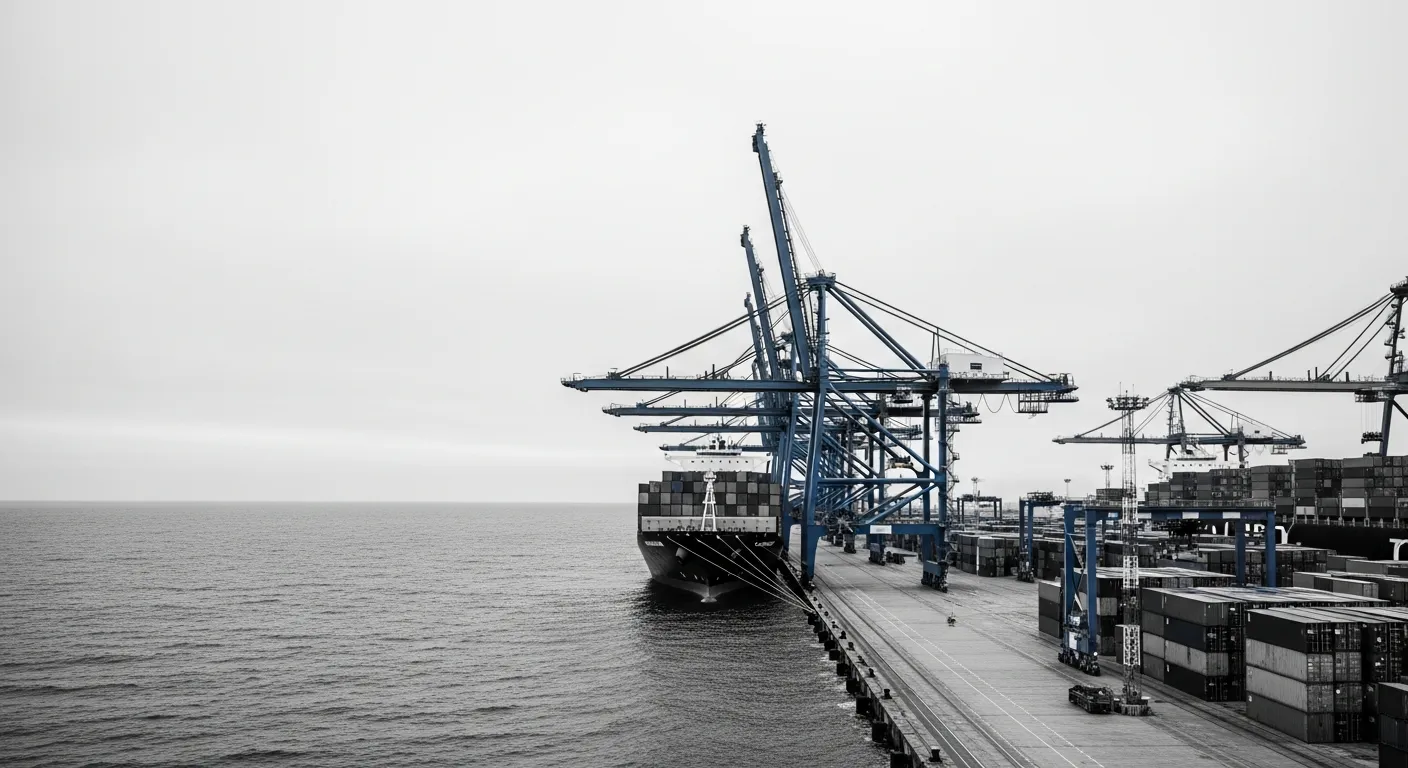
Ghana's Tema Port represents the most dramatic capacity expansion in the region. Terminal 3, operated by Meridian Port Services (a joint venture between Ghana Ports and Harbours Authority at 30 per cent, APM Terminals at 35 per cent, and Africa Global Logistics at 35 per cent), tripled the port's overall container handling capacity from 800,000 TEUs annually to 3 million TEUs following a $1.5 billion expansion investment. The terminal now spans 127 hectares with a 1.4-kilometre quay and four ultra-modern berths capable of handling the world's largest container vessels with a 16-metre draft. Phase 2 expansion, officially launched by Ghanaian President Nana Akufo-Addo in November 2023, introduced 15 additional gantry cranes (3 ship-to-shore and 12 electric rubber-tyred gantries), with deployment of further equipment continuing into 2026.
Tema's new capacity has already attracted major international shipping lines seeking a West African transshipment hub. Hapag-Lloyd, the world's fifth-largest carrier, named Tema its transshipment hub for West Africa, routing cargo flows between Europe and southern Africa through the facility. Transshipment traffic surged past 4.4 million tonnes in 2024—negligible a decade earlier—signalling how rapidly the terminal has gained regional importance. The terminal's 24/7 receipt and delivery operations (except Christmas and Good Friday), combined with state-of-the-art cargo handling equipment and digitalised processes, position Tema as a leading maritime hub in sub-Saharan Africa. MPS has also received the "Green Terminal" designation from Bureau Veritas, underscoring commitment to sustainable operations and innovative logistics solutions that support African economic growth.
Digital Transformation and Operational Efficiency Drive Regional Competitiveness
Beyond physical infrastructure, West African ports are embracing digitalization and automation to match global best practices. Douala Port's finalised port information system, scheduled for full operational deployment by September 2026, will capture all stakeholder data in a centralised module—a critical advancement given that current customs and transit clearance procedures still involve physical steps creating inefficiencies and vulnerability to corrupt practices. The Port Authority has committed to integrating shipping line, agent, and stevedore information into unified digital workflows accessible across government agencies and port operators.
Ghana's MPS Terminal 3 has deployed cutting-edge container handling technology, including advanced yard cranes, scanners, and digitalised processes that enable rapid vessel turnaround and reduced logistics costs. These investments align with the African Continental Free Trade Area (AfCFTA) ambitions across the region, as improved port infrastructure and digital integration strengthen trade flows across West Africa and the Sahel. Tema's expanded infrastructure, combined with its Green Terminal certification and technologically advanced processes, signals that West African ports are moving beyond traditional cargo handling toward integrated blue economy platforms encompassing maritime services, coastal logistics, and value-added supply chain functions.
Supplier and Bunker Service Opportunities in Emerging Hubs
For ship suppliers, bunker providers, and maritime service vendors, the proliferation of modern deepwater ports across West and Central Africa presents a strategic reorientation of regional traffic flows. Congestion at South African ports—historically the dominant transhipment and provisioning hub for southern and central African routes—has driven vessel operators to seek alternative staging points. Tema's capacity for mega-ships (up to 18,000 containers), Lekki's deepwater capability, and Douala's emerging dry bulk specialisation create a distributed network of procurement gateways. Suppliers can now position provisions, spare parts, and lubrication stocks across Lagos, Accra, and Douala rather than concentrating on South African corridors. Bunker traders will find new demand patterns as transshipment volumes redirect through Tema and as industrial cargo flows through Douala accelerate.
The digitalization roadmap across these ports—particularly Douala's September 2026 full digitalization and Tema's already-operational advanced terminal operating systems—means that procurement activities will increasingly require electronic data interchange (EDI) compliance, vendor portals, and real-time inventory visibility. Suppliers must adapt to single-window customs systems and integrated port community platforms to compete effectively in these emerging hubs.
What This Means for Procurement and Supply-Chain Partners
The $27 billion port expansion wave is not a transient surge but a structural rebalancing of West and Central African maritime infrastructure. The combination of deepwater capacity (Lekki, Simandou-Morebaya planning), dry bulk specialisation (Douala), and mega-ship transhipment capability (Tema) creates multiple entry points for regional trade previously bottlenecked through South African gateways. For maritime suppliers and bunker merchants, this means diversifying service delivery networks, establishing partnerships with emerging port authorities and terminal operators, and investing in digital compliance systems that align with port community platforms across Lagos, Accra, Douala, and Dakar. The window for early positioning in these growth markets is now—before congestion returns and competitive pressures intensify across the region.